Politics and History of Political Scholar of Dr. Zachary Onyonka
By Jeff Kizzilah Digital Editor
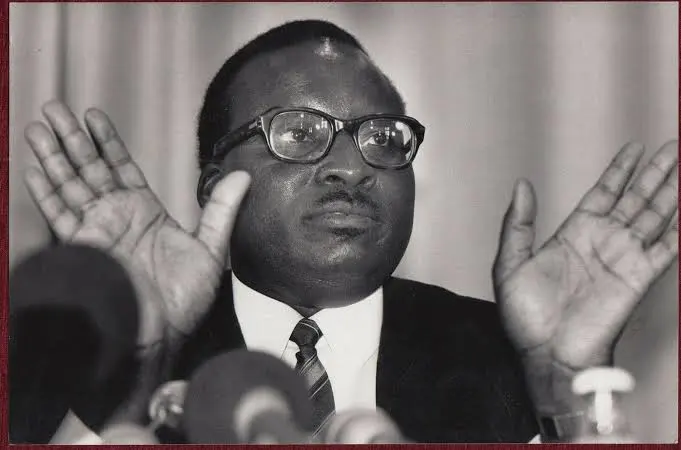
Dr. Zachariah Theodore Onyonka: The politician Kenya remembers
Dr. Zachariah Theodore Onyonka (1939–1996) was one of the prominent politicians and technocrats from the Kisii region in post-independence Kenya.
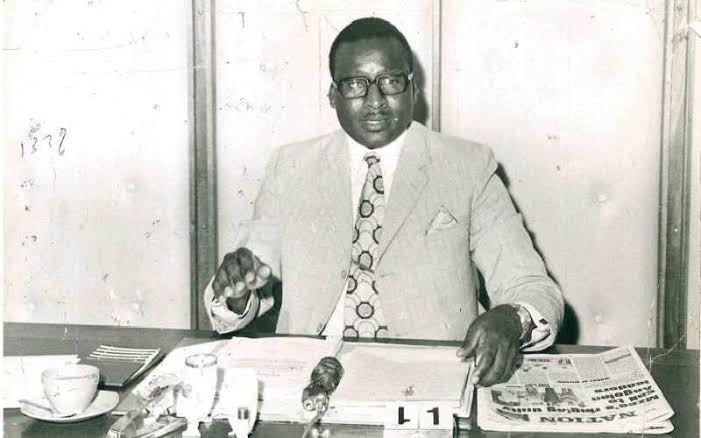
He represented Kitutu West in Parliament from 1969 and went on to serve in several ministerial positions under both President Jomo Kenyatta and President Daniel arap Moi.
He died on 22 October 1996, aged about 57.
His early life and education
Onyonka was born on 28 June 1939 in the then Meru District, where his father, Godrico Oeri Mairura, was serving as a police officer. His family later returned to Kisii.
He attended St Mary’s Nyabururu and St Mary’s Yala, completing secondary school in 1958. He subsequently worked for the Gusii District Council before receiving a scholarship to study in the United States.
He earned a degree in Economics from the University of Puerto Rico and later studied banking at Syracuse University in New York, where he proceeded to doctoral studies. He also worked at the University of Nairobi as an academic before entering elective politics.
His entry into Parliament
Onyonka entered Parliament in the 1969 General Election, defeating veteran politician Lawrence Sagini in Kitutu West. Remarkably, he was only about 30 years old.
His victory marked the beginning of a long political career that would see him become one of the most prominent ministers from the Kisii region.
A Cabinet career spanning two presidents
One of the most significant aspects of Onyonka’s career was the number of important government portfolios he held.
Under Jomo Kenyatta, he was appointed to Cabinet after the death of Tom Mboya in 1969. His responsibilities over the years included economic planning and other major government functions.
Under Daniel arap Moi, he continued serving in government and held portfolios including:
Planning and National Development
Health
Housing and Social Services
Information and Broadcasting
Education
Science and Technology
Foreign Affairs
Research and Technical Training/Technology
Historical records also identify him as Kenya’s Minister for Planning and National Development in international agreements involving the African, Caribbean and Pacific (ACP) states and the European Economic Community.
United Nations Treaty Collection +1
The economist who wanted to become Finance Minister
An interesting part of Onyonka’s story is that he reportedly aspired to become Kenya’s Finance Minister.
That ambition made sense given his academic and professional background in economics and banking. However, he died in 1996 before achieving that particular goal.
What did he do for ordinary people?
Beyond Cabinet, Onyonka’s political legacy was also associated with local development.
According to a retrospective account published by Taifa Leo, he was involved in development projects including roads and schools in his constituency. He reportedly travelled to his constituency regularly to inspect construction projects, participate in school-board matters and follow up on the recruitment of teachers.
That gives an interesting picture of his approach to politics: national Cabinet responsibilities combined with attention to constituency development.
A reputation for moderation
Another important part of his political history was his approach during periods of intense political competition within KANU.
The historical account says that during the succession debates surrounding Kenyatta in the 1970s and the political tensions following the 1982 attempted coup, Onyonka generally tried to avoid taking extreme sides and instead sought reconciliation between opposing groups.
A later East African Legislative Assembly record also recalls Onyonka’s contribution to discussions about regional integration. A speaker remembered him warning that East Africa needed to learn from the collapse of the first East African Community and build institutions capable of surviving.
East African Legislative Assembly
Integrity and public service
One particularly notable anecdote concerns land.
According to Taifa Leo, Onyonka was once offered 50 acres of land in Kitale, but declined it and suggested that the land instead be given to his constituency. The same account portrays him as someone who was wary of enriching himself through public resources. This is a reported historical account rather than an independently established finding, but it is part of how his legacy has been remembered.
He was also awarded the national honour Elder of the Order of the Golden Heart (EGH), while Syracuse University awarded him an honorary Doctor of Letters for his service.
His final years and death
Onyonka suffered a stroke in 1988, after which his health deteriorated. Despite his health challenges, he continued serving in government for several years. He died on 22 October 1996.
His death brought to an end a political career that had stretched from the early post-independence period through the Kenyatta and Moi administrations.
What should Kenyans remember him for?
If his career is reduced to a few historical themes, Onyonka can be remembered as:
1. A scholar-politician — He came into politics with substantial academic training in economics and banking.
2. A long-serving Cabinet minister — He served in numerous important ministries under Kenya’s first two presidents.
3. A representative of Kisii in national government — His political influence extended beyond his constituency into Cabinet and regional affairs.
4. Constituency development — Schools, roads and other local projects were an important part of his political work.
5. A voice for reconciliation — Historical accounts describe his preference for dialogue and mediation during political disagreements.
6. An advocate of East African cooperation — His contribution to regional integration discussions remains part of the historical record.
East African Legislative Assembly
7. A politician whose career combined academia, economics and public service — His background was considerably different from the conventional political career path.
The Onyonka political legacy
Perhaps the most interesting part of the story is that the Onyonka name did not disappear from Kenyan politics after his death. His son Richard Momoima Onyonka later became the MP for Kitutu Chache South and served as an Assistant Minister for Foreign Affairs in the Kibaki-era coalition government.
So, nearly three decades after his death, Zachariah Theodore Onyonka remains part of the history of Kenya’s first generation of post-independence political leaders—particularly the generation that combined parliamentary politics, Cabinet service, academic training and constituency development.