DANGOTE REFINERY BREAKS GROUND IN LAMU: KSh2.2 TRILLION PROJECT SET TO RESHAPE AFRICA’S INDUSTRIAL FUTURE
By Jeff Kizzilah Digital Editor
The groundbreaking ceremony for the Dangote East Africa Petroleum Refinery has marked a major milestone in Kenya’s ambitions to strengthen energy security and accelerate industrialisation.
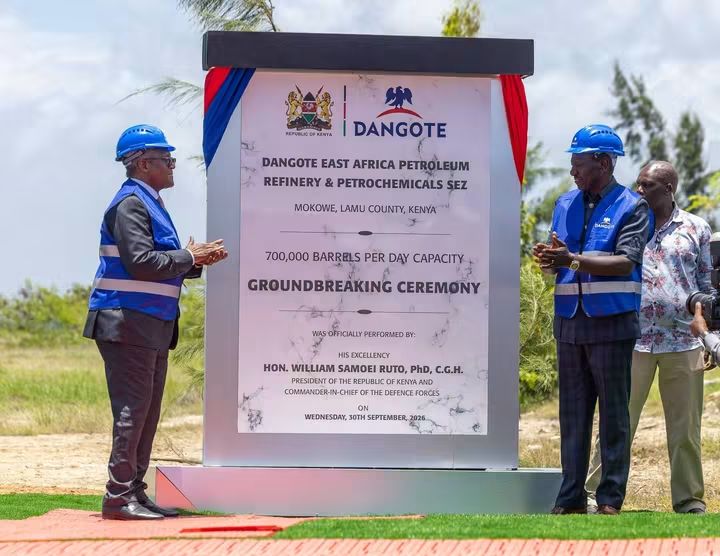
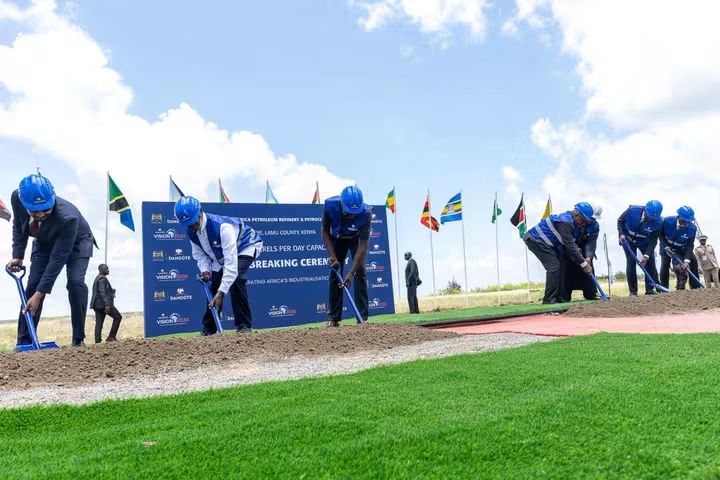
The KSh2.2 trillion ($16 billion) mega project was presided over by President William Ruto alongside Nigerian billionaire businessman Aliko Dangote, with four African Heads of State and high-level delegations from across the continent witnessing the landmark ceremony.
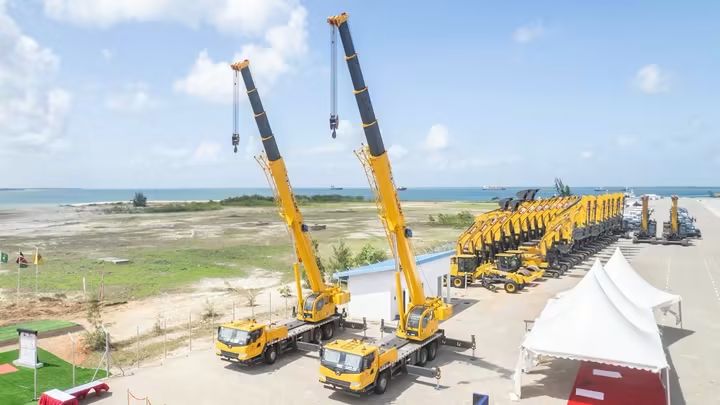
With a planned processing capacity of 700,000 barrels of crude oil per day, the refinery is projected to become the largest in East and Central Africa and one of the largest refinery projects globally.
The project is expected to reduce Kenya and the region’s reliance on imported petroleum products, strengthen energy security and help ease pressure on foreign exchange.
But the development goes beyond oil refining. The integrated industrial complex will include a 1,000MW power plant, a plastics manufacturing facility, as well as fertiliser and chemical production plants.
The project is also expected to generate significant economic activity, with projections indicating that it could boost Kenya’s economy by about 12 per cent and attract an additional $4 billion in foreign direct investment annually during the four-year construction period.
An estimated 60,000 direct jobs are expected to be created, while the project will also provide opportunities for skills development, local expertise and businesses across the supply chain.
The refinery is further expected to accelerate the transformation of the Lamu Port–South Sudan–Ethiopia Transport (LAPSSET) Corridor into a major industrial and logistics hub serving Kenya and the wider region.
The project comes amid renewed calls for African countries to move away from exporting raw materials while importing finished products.
Its proponents say the refinery represents a broader push towards value addition, manufacturing, job creation and greater economic self-reliance across the continent.
The groundbreaking therefore marks not only the beginning of a major energy project, but also a statement of ambition for Africa’s industrial future — turning large-scale investment into infrastructure, jobs, manufacturing capacity and regional economic integration.