Armed men fired tear gas and attacked voters and journalists during a by-election in Kenya on Thursday, underlining the threat of violence during next year’s general election.
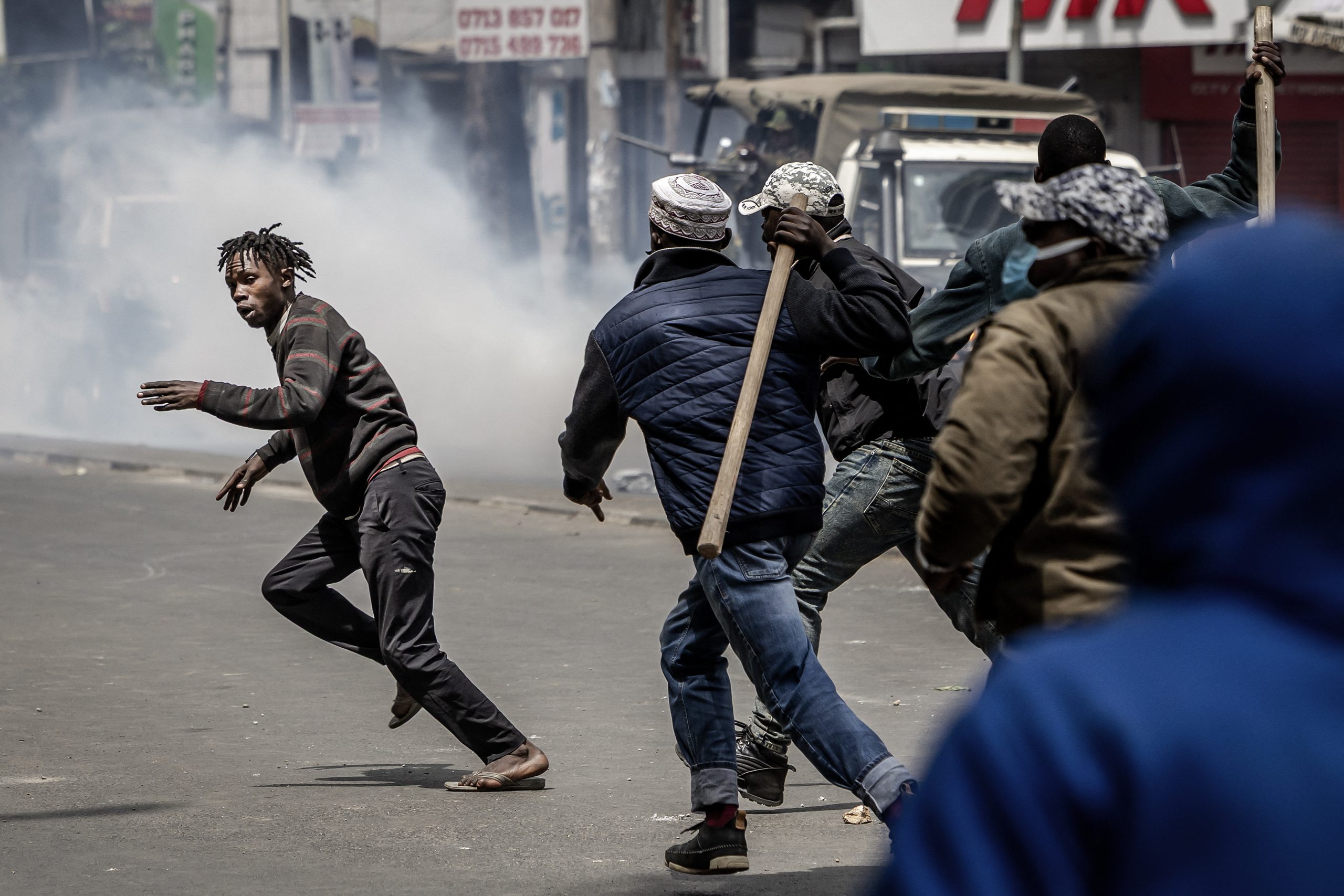
So-called “goons” are increasingly being hired, dozens or even hundreds at a time, to break up the rallies of political opponents and protesters, and attack civil rights groups — with police often turning a blind eye.
A recent study by Nairobi-based research firm Odipo Dev revealed a goons rate card, ranging from 500 shillings ($4) to work for a local councillor, up to 1,000 shillings for members of parliament. (Photo by Luis TATO / AFP)
Kenya has a history of political violence, and recent months have seen increased use of armed gangs by politicians, which analysts fear will only increase as President William Ruto seeks re-election in August 2027.
The build-up to Thursday’s by-election in Ol Kalou in central Kenya was marked by allegations of voter bribery and clashes between gangs, some armed with bows and arrows, reportedly hired by rival politicians.
Videos posted by local media showed multiple black SUVs sweeping through the streets during the vote on Thursday, with hooded men firing tear gas into the air and beating voters at polling stations.
The Nation Media Group condemned attacks on its journalists at a polling station in a primary school, saying a cameraman was tasered and beaten, and another was robbed at gunpoint.
A journalist for The Star newspaper said he was attacked by one group who identified themselves as police and took his equipment.
Kenyan police had said 1,000 officers were deployed to keep the peace.
But interior minister Kipchumba Murkomen appeared to say that police may have been responsible for some of the violence.
“These allegations of… persons who are causing havoc in Ol Kalou must be investigated thoroughly and anyone culpable must be arrested,” Murkomen told journalists.
“Whether they were deployed by the Inspector General (of police) and went and misbehaved they must be dealt with,” he added.
The by-election pitted candidates backed by President Ruto and his arch-rival, Rigathi Gachagua, who was his deputy until he was impeached in 2024.
Gachagua said the violence was “a pilot of what will happen next year”.
“Kenyans must know now — they must be prepared that we are going to have a big problem next year,” Gachagua said in televised remarks.
Amnesty International this week denounced the by-election campaign, saying it involved “bribery, intimidation, misuse of public resources, and the involvement of public officers in partisan campaigns”.
It highlighted an attack by “gun-toting goons” on one campaign vehicle, and said voters were being bribed with cash handouts, mattresses, cooking gas, and food items.
A report by the Kofi Annan Foundation, published in June, estimates that Kenya faces an 81.6 percent probability of election-related violence during the 2027 general election.