By News Desk
The National Treasury has defended the country’s economic performance, debt management strategy and public finance accountability mechanisms.
The exchaquer assured that Kenya remains resilient despite mounting global uncertainties and domestic challenges.
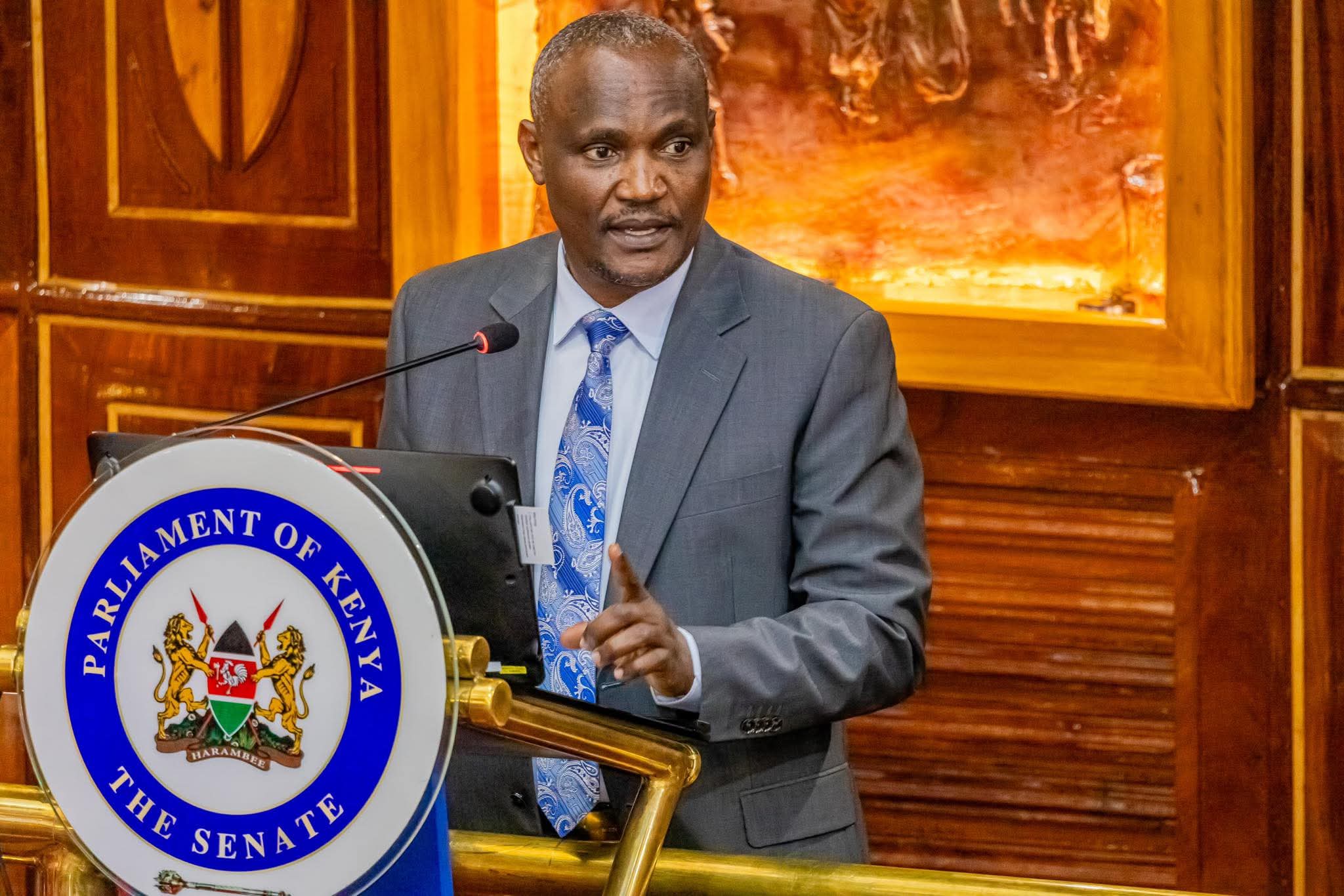
In a 90-page responses to the Senate, Treasury Cabinet Secretary John Mbadi said the economy continued to record positive growth across all sectors despite disruptions caused by the conflict in the Middle East and drought-related risks experienced in late 2025.
“Against this global backdrop, the Kenyan economy continues to demonstrate resilience despite facing elevated external risks,” Mr Mbadi said.
He noted that the economy grew by 4.6 per cent in 2025 compared to 4.7 per cent in 2024.
He attributed the slowdown partly to external shocks affecting global commodity markets, investor confidence and financial conditions.
The Cabinet Secretary was responding to a series of Senate questions, including one from Kisumu Senator Tom Ojienda.
Senator Ojienda had sought details on government interventions to address slowed economic growth and another on the country’s public debt position.
On debt, CS Mbadi told senators that Kenya’s public and publicly guaranteed debt stood at approximately Sh12.842 trillion as of February 26, 2026, representing 69.49 per cent of Gross Domestic Product (GDP).
Of th Sh12.842 trillion, domestic debt stands at Sh7.063 trillion while external debt stands at Sh5.779 trillion.
The CS added that multilateral lenders remained the largest source of external borrowing, followed by commercial and bilateral creditors.
The Treasury also highlighted achievements registered under the implementation of Vision 2030, citing major investments in education, health, water, housing and social protection.
According to the ministry, the government has expanded access to education through the construction of hundreds of secondary schools and the rollout of the Competency-Based Curriculum (CBC).
“In the health sector, reforms were implemented to advance Universal Health Coverage,” Mr Mbadi said.
He pointed to the transition from the National Hospital Insurance Fund (NHIF) to the Social Health Authority (SHA) and the expansion of community health services.
He further noted that affordable housing projects, devolution funding and social protection programmes had improved access to services and promoted inclusion across the country.
“Another important achievement of Kenya Vision 2030 has been the expansion of equity and inclusion through devolution, social protection, education, health, water, housing and digital connectivity,” he said.
On public procurement reforms, the Treasury said it had strengthened electronic procurement systems through provisions in the Public Finance Management Act and related regulations.
The ministry said the reforms were aimed at enhancing transparency, efficiency and accountability in both national and county governments.
Responding to concerns raised by nominated Senator Hamida Kibwana regarding audit queries flagged by the Auditor-General, the CS said existing constitutional and legal frameworks provide mechanisms for tracking, reviewing and resolving audit issues.
He said the government continues to strengthen oversight systems to ensure corrective action is taken by ministries, departments and agencies.