By News Desk
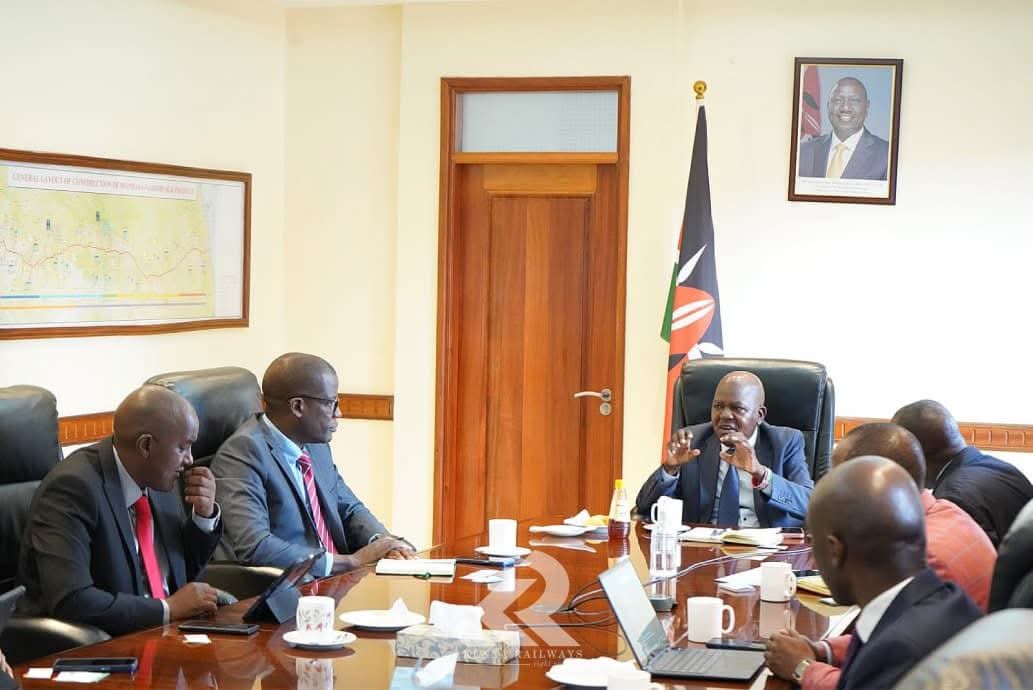 The Managing Director of Kenya Railways, Philip Mainga, today held high-level discussions with Bamburi Group CEO Geoffrey Ndugwa aimed at strengthening transport solutions to improve cargo movement efficiency and deepen long-term collaboration between the two institutions.
The meeting underscored the growing importance of rail transport in supporting Kenya’s industrialization agenda, regional trade, and sustainable logistics systems.
With over seven decades of operation, Bamburi Group has significantly expanded its rail transport capacity, currently operating up to 18 full cement trains monthly from its Mombasa and Athi River plants through the railway network. The volumes translate to approximately 11,000 tonnes of cement moved by rail, in addition to between 75,000 and 90,000 tonnes of clinker transported monthly from Mombasa, alongside other raw materials and finished products.
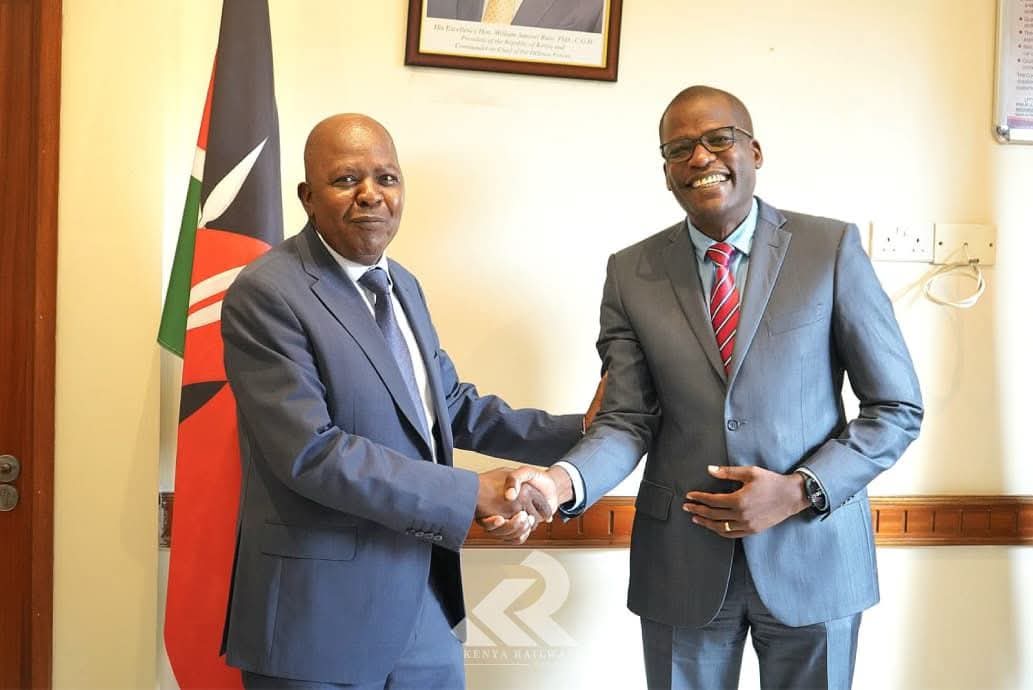
The Managing Director of Kenya Railways, Philip Mainga, today held high-level discussions with Bamburi Group CEO Geoffrey Ndugwa.
Speaking during the engagement, the two leaders emphasized the strategic role of rail freight in reducing road congestion, lowering transportation costs, and promoting environmentally sustainable cargo movement across the region.
Kenya Railways further highlighted its ongoing infrastructure expansion and rehabilitation projects designed to unlock greater business opportunities for manufacturers and traders. Among the key projects discussed was the planned operationalization of the Gilgil–Nyahururu railway branch line within the next month, a move expected to enhance connectivity and cargo access across the Rift Valley region.
The corporation also updated Bamburi Group on the ongoing rehabilitation of the Voi–Taveta branch line, whose groundbreaking ceremony was held on 10th April 2026. Once completed, the line is expected to play a strategic role in facilitating trade and supporting Bamburi Group’s growing market presence in Tanzania and the wider East African region.

The two institutions reaffirmed their commitment to sustained collaboration geared towards expanding rail freight business, strengthening regional connectivity, and supporting industrial growth for the next seven decades and beyond.
The partnership is expected to contribute significantly to Kenya’s broader economic transformation agenda by promoting efficient logistics, enhancing trade competitiveness, and supporting the government’s vision for integrated transport infrastructure.